Aluminum production environments present among the most aggressive service conditions for sealing systems, particularly in bauxite slurry pumping applications. These systems must contend with a uniquely severe medium characterized by high abrasiveness and extreme alkalinity (pH up to 14). Ensuring reliable sealability under such conditions requires a deliberate, engineering-driven approach to both material selection and system design.
By Yuri Reis, TEADIT
Operational Challenges in Slurry Sealing
The primary failure mechanisms in aluminum plant sealing systems stem from three interacting stressors: chemical attack, thermal buildup, and mechanical erosion. Caustic liquor rapidly degrades conventional sealing materials lacking chemical inertness. At the same time, high rotational speeds generate frictional heat at the sealing interface, leading to vitrification (glass-like surface hardening) of packing materials. Suspended bauxite particles introduce continuous abrasive wear, compromising structural integrity and accelerating leakage.
Mitigating these risks requires sealing materials that integrate chemical resistance, thermal conductivity, and mechanical resilience into a single solution.
Material Engineering: Expanded PTFE with Graphite Integration
From a materials engineering perspective, graphited expanded PTFE packing lubricated with silicone oil represents an optimal solution for these conditions. Expanded PTFE (ePTFE) provides near-universal chemical inertness across the full pH spectrum, preventing degradation even in highly caustic environments. However, not all ePTFE perform equally.
Expanded PTFE (ePTFE) is particularly advantageous because it provides strong chemical resistance while remaining flexible enough to conform within the stuffing box. In abrasive slurry service, the consistency and quality of the expanded PTFE yarn help the packing maintain sealing integrity under compression, shaft movement, and continuous exposure to suspended solids. In high-performance packings, such as TEADIT® 2007, performance is influenced not only by the braid construction, but also by the quality and consistency of the expanded PTFE base material used to produce the yarn.
The incorporation of graphite within the PTFE matrix further enhances performance. Graphite functions as both a solid lubricant and a thermal conductor, dissipating heat away from the sealing interface. When graphite is encapsulated within the filament rather than applied as a surface coating, thermal conductivity remains consistent throughout the packing’s lifecycle, ensuring sustained performance under continuous operation.
Silicone lubrication complements this system by reducing the coefficient of friction during startup and transient conditions, minimizing initial heat generation, and lowering energy consumption. The silicone oil used in TEADIT® 2007 includes high-temperature-resistant additives, helping the lubrication system remain effective under demanding operating conditions.
Construction and Manufacturing Considerations
Material selection alone is insufficient without proper construction. Optimized braiding is critical to maintaining dimensional stability, packing integrity, and consistent performance under dynamic slurry service. The braid construction must allow the packing to conform within the stuffing box while resisting distortion, extrusion, and premature wear caused by shaft movement, pressure fluctuations, and abrasive solids.
When combined with tightly controlled filament manufacturing, this optimized construction approach further enhances overall packing consistency and reliability. Uniform filament-level lubrication helps maintain consistent frictional behavior across the packing cross-section, reducing localized wear and extending service life.
System-Level Optimization: Beyond the Product
Long-term sealing reliability is achieved through a systems-based approach that integrates engineered materials, equipment condition assessment, and operational best practices.
Achieving optimal sealing performance requires alignment across three critical pillars:
Strategic Value of Integrated Sealing Solutions
In high-throughput aluminum operations, unplanned downtime directly impacts profitability. Implementing engineered sealing solutions supported by technical expertise and application-specific guidance enables facilities to reduce failure rates, extend maintenance intervals, and improve overall equipment reliability.
An integrated approach that combines advanced material science with on-site technical support and process optimization transforms sealing from a consumable expense into an engineered sealing strategy for aggressive slurry environments. This shift is critical in competitive markets where operational efficiency and uptime define long-term success.
By addressing sealing challenges holistically, from filament engineering to field implementation, aluminum producers can significantly enhance both performance and lifecycle value in their critical pumping systems.
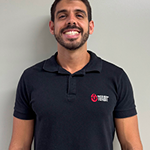 About the Author
Yuri Reis is a mechanical engineer with nine years of professional experience. He began his career at TEADIT® in 2017. Over the course of his tenure, he has worked in several areas of the organization, including the Quality Assurance department and braided packing manufacturing. He also gained engineering experience in expansion joints at TEADIT® Juntas. Currently, he serves as an Application Engineering Specialist, conducting field visits to support customers across Brazil and Latin America, with a particular specialization in the steel industry. .
By Yuri Reis, TEADIT
Operational Challenges in Slurry Sealing
The primary failure mechanisms in aluminum plant sealing systems stem from three interacting stressors: chemical attack, thermal buildup, and mechanical erosion. Caustic liquor rapidly degrades conventional sealing materials lacking chemical inertness. At the same time, high rotational speeds generate frictional heat at the sealing interface, leading to vitrification (glass-like surface hardening) of packing materials. Suspended bauxite particles introduce continuous abrasive wear, compromising structural integrity and accelerating leakage.
Mitigating these risks requires sealing materials that integrate chemical resistance, thermal conductivity, and mechanical resilience into a single solution.
Material Engineering: Expanded PTFE with Graphite Integration
From a materials engineering perspective, graphited expanded PTFE packing lubricated with silicone oil represents an optimal solution for these conditions. Expanded PTFE (ePTFE) provides near-universal chemical inertness across the full pH spectrum, preventing degradation even in highly caustic environments. However, not all ePTFE perform equally.
Expanded PTFE (ePTFE) is particularly advantageous because it provides strong chemical resistance while remaining flexible enough to conform within the stuffing box. In abrasive slurry service, the consistency and quality of the expanded PTFE yarn help the packing maintain sealing integrity under compression, shaft movement, and continuous exposure to suspended solids. In high-performance packings, such as TEADIT® 2007, performance is influenced not only by the braid construction, but also by the quality and consistency of the expanded PTFE base material used to produce the yarn.
The incorporation of graphite within the PTFE matrix further enhances performance. Graphite functions as both a solid lubricant and a thermal conductor, dissipating heat away from the sealing interface. When graphite is encapsulated within the filament rather than applied as a surface coating, thermal conductivity remains consistent throughout the packing’s lifecycle, ensuring sustained performance under continuous operation.
Silicone lubrication complements this system by reducing the coefficient of friction during startup and transient conditions, minimizing initial heat generation, and lowering energy consumption. The silicone oil used in TEADIT® 2007 includes high-temperature-resistant additives, helping the lubrication system remain effective under demanding operating conditions.
Construction and Manufacturing Considerations
Material selection alone is insufficient without proper construction. Optimized braiding is critical to maintaining dimensional stability, packing integrity, and consistent performance under dynamic slurry service. The braid construction must allow the packing to conform within the stuffing box while resisting distortion, extrusion, and premature wear caused by shaft movement, pressure fluctuations, and abrasive solids.
When combined with tightly controlled filament manufacturing, this optimized construction approach further enhances overall packing consistency and reliability. Uniform filament-level lubrication helps maintain consistent frictional behavior across the packing cross-section, reducing localized wear and extending service life.
System-Level Optimization: Beyond the Product
Long-term sealing reliability is achieved through a systems-based approach that integrates engineered materials, equipment condition assessment, and operational best practices.
Achieving optimal sealing performance requires alignment across three critical pillars:
- Product engineering through the selection of high-performance packing materials tailored to the application.
- Equipment condition, including proper pump tolerances, shaft or sleeve surface finish, hardness, and a functional flush water system.
- Operational practices such as correct installation, startup procedures, and ongoing monitoring.
Strategic Value of Integrated Sealing Solutions
In high-throughput aluminum operations, unplanned downtime directly impacts profitability. Implementing engineered sealing solutions supported by technical expertise and application-specific guidance enables facilities to reduce failure rates, extend maintenance intervals, and improve overall equipment reliability.
An integrated approach that combines advanced material science with on-site technical support and process optimization transforms sealing from a consumable expense into an engineered sealing strategy for aggressive slurry environments. This shift is critical in competitive markets where operational efficiency and uptime define long-term success.
By addressing sealing challenges holistically, from filament engineering to field implementation, aluminum producers can significantly enhance both performance and lifecycle value in their critical pumping systems.
About the AuthorYuri Reis is a mechanical engineer with nine years of professional experience. He began his career at TEADIT® in 2017. Over the course of his tenure, he has worked in several areas of the organization, including the Quality Assurance department and braided packing manufacturing. He also gained engineering experience in expansion joints at TEADIT® Juntas. Currently, he serves as an Application Engineering Specialist, conducting field visits to support customers across Brazil and Latin America, with a particular specialization in the steel industry. .