In heat exchanger systems, reliability is often associated with large-scale equipment, thermal efficiency, and process optimization. However, a common factor affecting performance is frequently underestimated: gasket selection and installation. What is often viewed as a routine maintenance component can significantly impact system reliability, emissions control, energy efficiency, and unplanned downtime. As industrial operations continue to prioritize uptime, sustainability, and process efficiency, sealing performance has become increasingly critical.
A persistent challenge in the industry is the tendency to treat gaskets as commodities rather than engineered sealing solutions. Sealing failures are often caused by inadequate system-level evaluation during specification and design, rather than material limitations alone. Effective sealing performance depends on understanding the interaction between the gasket and the complete joint assembly, including flange rigidity, bolt load, joint flexibility, operating pressure, media compatibility, and thermal movement. This engineering approach is reflected in the STAMPS framework, which evaluates sealing requirements based on Size, Temperature, Application, Media, Pressure, and System conditions.
The following insights highlight how these factors directly influence real-world heat exchanger reliability and why gasket selection has become a far more strategic engineering consideration.
Did you know thermal cycling can reduce gasket stress over time?
As temperatures fluctuate during heat exchanger operations, the systems continually expand and contract. This cycling can cause bolt load to gradually decrease, reducing gasket stress and increasing the risk of leakage during startups, shutdowns, and process upsets. High-recovery gasket designs, such as TEADIT® 907, are engineered to maintain sealing integrity under thermal and mechanical cycling conditions.
Did you know bolted flange joints are constantly moving?
Heat exchanger assemblies are not static. Thermal expansion and contraction create radial shear between flanges, placing additional stress on the gasket and challenging long-term sealing integrity. This movement underscores the importance of selecting gasket designs that maintain recovery and flexibility under dynamic operating conditions.
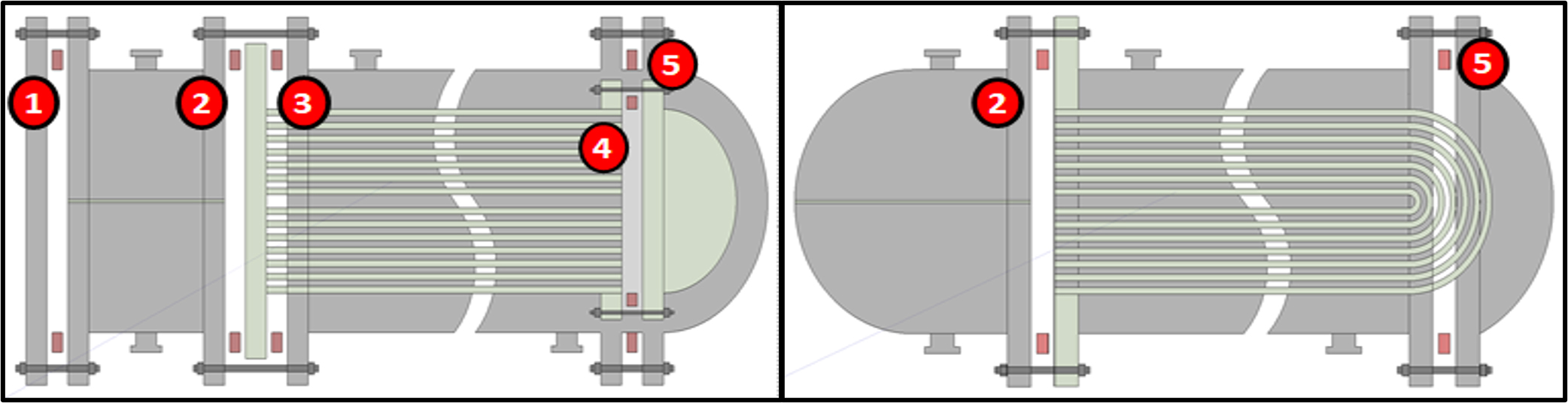
Depiction of heat exchanger assembly. Numbers indicate location of sealing gaskets.
Did you know modern gasket designs are engineered for dynamic conditions?
Advanced gasket technologies such as corrugated metal and kammprofile gaskets are designed specifically for dynamic operating environments. These gasket styles combine a metallic core with soft sealing materials such as graphite or PTFE, allowing the gasket to maintain a tight seal while accommodating movement within the joint assembly.
Did you know flange condition directly affects gasket performance?
Even properly selected gaskets may struggle if flange surfaces contain imperfections or uneven compression areas. In field applications, flange irregularities have caused hydrostatic test failures despite the use of conventional gasket designs.
Instead of extensive flange re-machining, engineers used a kammprofile gasket with expanded PTFE to identify compression inconsistencies across the flange surface. Gasket tape was then applied to shim low areas and restore sealing integrity, reducing downtime and avoiding unnecessary rework.
Did you know gasket performance affects energy efficiency?
Sealing performance affects more than leak prevention. Internal leakage can allow fluids to bypass intended flow paths, reducing heat-transfer effectiveness and forcing operators to compensate with additional energy input. Poor sealing performance may also contribute to increased emissions and reduced operational efficiency.
Did you know manufacturing precision impacts sealing reliability?
Modern gasket performance depends heavily on precision manufacturing and quality control. The broader takeaway is straightforward: small components can have a significant impact on operational reliability. When evaluating heat exchanger reliability, sealing performance should be viewed as a strategic engineering consideration rather than a routine maintenance decision. Re-evaluating gasket selection practices, installation procedures, flange conditions, and joint design may reveal opportunities to improve heat exchanger performance, reduce downtime, and strengthen long-term operational efficiency.
To learn more about engineered sealing solutions, explore advanced gasket technologies such as TEADIT® 907 and other high-recovery sealing solutions designed for dynamic operating environments.
A persistent challenge in the industry is the tendency to treat gaskets as commodities rather than engineered sealing solutions. Sealing failures are often caused by inadequate system-level evaluation during specification and design, rather than material limitations alone. Effective sealing performance depends on understanding the interaction between the gasket and the complete joint assembly, including flange rigidity, bolt load, joint flexibility, operating pressure, media compatibility, and thermal movement. This engineering approach is reflected in the STAMPS framework, which evaluates sealing requirements based on Size, Temperature, Application, Media, Pressure, and System conditions.
The following insights highlight how these factors directly influence real-world heat exchanger reliability and why gasket selection has become a far more strategic engineering consideration.
Did you know thermal cycling can reduce gasket stress over time?
As temperatures fluctuate during heat exchanger operations, the systems continually expand and contract. This cycling can cause bolt load to gradually decrease, reducing gasket stress and increasing the risk of leakage during startups, shutdowns, and process upsets. High-recovery gasket designs, such as TEADIT® 907, are engineered to maintain sealing integrity under thermal and mechanical cycling conditions.
Did you know bolted flange joints are constantly moving?
Heat exchanger assemblies are not static. Thermal expansion and contraction create radial shear between flanges, placing additional stress on the gasket and challenging long-term sealing integrity. This movement underscores the importance of selecting gasket designs that maintain recovery and flexibility under dynamic operating conditions.
Depiction of heat exchanger assembly. Numbers indicate location of sealing gaskets.
Did you know modern gasket designs are engineered for dynamic conditions?
Advanced gasket technologies such as corrugated metal and kammprofile gaskets are designed specifically for dynamic operating environments. These gasket styles combine a metallic core with soft sealing materials such as graphite or PTFE, allowing the gasket to maintain a tight seal while accommodating movement within the joint assembly.
Did you know flange condition directly affects gasket performance?
Even properly selected gaskets may struggle if flange surfaces contain imperfections or uneven compression areas. In field applications, flange irregularities have caused hydrostatic test failures despite the use of conventional gasket designs.
Instead of extensive flange re-machining, engineers used a kammprofile gasket with expanded PTFE to identify compression inconsistencies across the flange surface. Gasket tape was then applied to shim low areas and restore sealing integrity, reducing downtime and avoiding unnecessary rework.
Did you know gasket performance affects energy efficiency?
Sealing performance affects more than leak prevention. Internal leakage can allow fluids to bypass intended flow paths, reducing heat-transfer effectiveness and forcing operators to compensate with additional energy input. Poor sealing performance may also contribute to increased emissions and reduced operational efficiency.
Did you know manufacturing precision impacts sealing reliability?
Modern gasket performance depends heavily on precision manufacturing and quality control. The broader takeaway is straightforward: small components can have a significant impact on operational reliability. When evaluating heat exchanger reliability, sealing performance should be viewed as a strategic engineering consideration rather than a routine maintenance decision. Re-evaluating gasket selection practices, installation procedures, flange conditions, and joint design may reveal opportunities to improve heat exchanger performance, reduce downtime, and strengthen long-term operational efficiency.
To learn more about engineered sealing solutions, explore advanced gasket technologies such as TEADIT® 907 and other high-recovery sealing solutions designed for dynamic operating environments.