Fugitive emissions have moved from a recommended design objective to a mandatory performance requirement in many regions. For valve original equipment manufacturers (OEMs), the shift is particularly significant in Europe, where the latest TA Luft requirements now apply to new installations and will progressively extend to existing equipment. This regulatory change is reshaping how valve platforms are specified, tested, and certified.
For OEMs, the challenge is no longer limited to selecting a packing that seals. The challenge now is to design valve platforms that can be certified, verified, and maintained under increasingly strict emission limits while maintaining performance, reliability, and cost competitiveness.
It is therefore important that operators and end users are informed about modern low-emission packing solutions used to support valve certification and long-term compliance, as well as what OEMs should consider when designing new valve platforms.
By Julia Köder, Angelica Pajkovic, Johannes Müller, Josmar Cristello
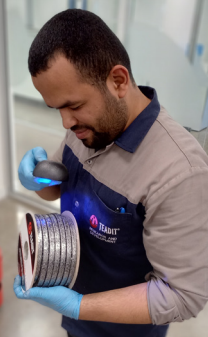
Depiction of engineer viewing TEADIT® 2848 packing with TEADIT® TAGS™. TEADIT® TAGS™ are traceable particles that may have different forms, compositions, sizes, and are able to be detected by distinct apparatus. This groundbreaking design ensures the traceability of the product before, or even after, it has been in service.
Understanding TA Luft and Why It Matters to Valve OEMs
TA Luft (Technische Anleitung zur Rein-haltung der Luft) is Germany’s technical instruction on air quality control and is one of the most influential industrial emissions regulations in Europe. Although it is a German regulation, it strongly influences equipment specifications across the European Union, as many multinational operators adopt it as a baseline requirement for environmental compliance.
The most recent revision significantly tightened fugitive emission requirements for industrial equipment such as valves, pumps, compressors, and flanged connections. The regulation focuses on minimizing volatile organic compound (VOC) emissions from industrial installations.
The regulation introduces several important implications for valve manufacturers:
- New equipment must comply immediately.
- Valves installed in new facilities or new process units must now meet low-emission requirements at the time of installation. This means compliance must be demonstrated before equipment enters service.
- Existing equipment must be upgraded.
- Facilities operating older equipment are expected to upgrade or retrofit over time. This creates a long-term demand for certified low-emission valve platforms.
- Emissions monitoring is the responsibility of the facility.
- Operators must measure and document emissions as part of ongoing compliance. Equipment with higher leakage levels increases monitoring frequency and associated costs.
- Certification is no longer optional.
- Valve designs must now be supported by fugitive emission test data and certification. Without documented performance, valves may not be accepted for new installations.
For valve OEMs, TA-Luft effectively shifts low-emission sealing from a performance advantage to design requirement.
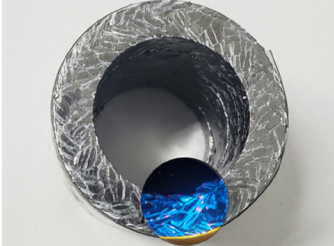
Close up view of 2848 style packing with TEADIT® TAGS™.
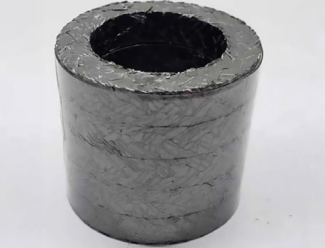
TEADIT 2848 compression packing ring set.
How Regulation Impacts Packing Selection
To support valve certification, compression packing used in valve stems must demonstrate performance under recognized fugitive emission test protocols. These tests simulate real operating conditions, including pressure, temperature cycling, and mechanical movement.
Modern low-emission packing is a key enabler for meeting ISO 15848-1 fugitive emissions targets in valve-type testing. This drives packing selection toward solutions that can maintain low leakage over the required mechanical and thermal cycles.
For example, a control valve equipped with TEADIT® 2848 packing was qualified in accordance with ISO 15848-1:2015 using methane as the test medium. The test was performed on a 1-1/2-inch Class 300 globe control valve and included:
- 100,000 mechanical cycles.
- 4 thermal cycles up to 200 °C.
- Test pressure of 750 psi (at ambient temperature).
- Tightness Class AM requirement of ≤ 50 ppm leakage (methane).
ISO FE AM – CC3 – SSA1 – t200 °C – CL 300 – ISO 15848-1
Maximum packing leakage during testing measured 4 ppm, well below the 50-ppm limit required for Tightness Class A. This represents the highest level of endurance and tightness defined by ISO 15848-1 and confirms the valve’s suitability for low-emission service.1
This level of performance places the packing significantly below typical regulatory thresholds, providing a margin that supports valve certification and long-term compliance, making it an ideal choice for leak prevention across several applications.
Emissions, Maintenance, and the True Cost of Valve Ownership
Regulatory compliance introduces another dimension that OEMs must consider: ongoing emissions monitoring and reporting.
Facilities are increasingly required to measure and document emissions from installed equipment. Higher emissions can lead to:
- Increased inspection frequency.
- Higher compliance costs.
- Potential regulatory penalties.
- Potential health and safety risks to both personnel and the surrounding environment.
Low emission packing systems provide an indirect but measurable benefit. By reducing leakage levels well below regulatory thresholds, they can help reduce the frequency and cost of monitoring programs.
For end users, this translates into lower total cost of ownership. For OEMs, it becomes a competitive differentiator when selecting packing systems during valve design.
Why OEMs Are Moving Toward Integrated Fugitive Emission Packing Sets
Low-emission sealing is no longer driven solely by regulatory pressure. Valve manufacturers are increasingly recognizing that fugitive emissions performance directly affects valve reliability, lifecycle cost, maintenance intervals, and overall product competitiveness.
Packing that maintains tight sealing performance reduces unplanned maintenance, minimizes product loss, stabilizes valve torque requirements, and helps extend service intervals. For end users, this translates into improved operational uptime and reduced monitoring costs. For OEMs, it creates a measurable performance advantage that can influence specification and vendor selection.
Valve packing systems are therefore evolving from single-material selection to validated valve packing combinations ready for qualification testing.
For OEMs, packing that has performed well in prior ISO 15848-1 valve-type tests can streamline development by providing a lower-risk starting point. However, because ISO 15848-1 is a valve-level qualification, final performance still depends on the full valve design, assembly, and test conditions.
Material Performance Matters: The Role of Flexible Graphite
The performance of modern fugitive emission packing systems is closely tied to the properties of high-purity flexible graphite.
These materials provide:
- Stability across wide temperature ranges.
- Broad chemical compatibility.
- Low friction characteristics.
- Long service life in demanding process environments.
These characteristics are critical for valve OEMs designing platforms for diverse service conditions. Packing performance must remain stable across temperature cycling, pressure variation, and chemical exposure while maintaining consistent sealing stress.
Supporting Valve Certification
Many valve manufacturers are now facing a practical challenge. They understand the need for certified low-emission performance, but lack internal resources to navigate certification testing and documentation.
Common challenges include:
- Determining the correct test standard for the valve type.
- Preparing valves for fugitive emission testing.
- Generating documentation required for certification.
- Integrating packing selection into the valve qualification process.
This has created a growing need for collaboration between valve OEMs and sealing specialists during the design and certification phase.
For valve OEMs developing new platforms or updating existing designs, several key priorities are emerging:
1. Packing selection must be integrated early in the design process.
2. Certification requirements must be considered during product development.
3. Low-emission performance must be validated through recognized testing.
4. Collaboration with sealing specialists can accelerate certification.
The transition to stricter emission regulations is reshaping the valve industry. Manufacturers that integrate low-emission sealing technology into their valve platforms today will be better positioned to meet regulatory requirements and customer expectations tomorrow.
Final Thoughts
Fugitive emissions requirements are reshaping valve design, testing, and certification worldwide. Regulations such as TA Luft have accelerated the need for proven low-emission performance, but the impact extends beyond compliance to reliability, maintenance planning, and lifecycle value.
Meeting these expectations requires a strong understanding of materials, testing standards, installation practices, and certification pathways. As requirements continue to evolve, collaboration with experienced sealing specialists, such as TEADIT®, can help valve manufacturers accelerate qualification and confidently deliver valve platforms built for the next generation of low-emission performance.
References
[1] United Valve. ISO 15848-1 Testing Summary: Fisher EZ-CV 1-1/2 in. Class 300 Globe Control Valve with TEADIT® 2848 Stem Packing. Test report for Teadit N.A., Inc., Work Order 120715, Pasadena, TX. Testing conducted November 14–28, 2023.
[2] International Organization for Standardization (ISO). ISO 15848-1:2015 — Industrial valves — Measurement, test and qualification procedures for fugitive emissions — Part 1: Classification system and qualification procedures for type testing of valves. Geneva: ISO, 2015.
 About the Author
Angelica Pajkovic is a Client Specialist at Teadit, with a particular focus on technical content development. Hailing from Toronto, Canada, she has over six years of experience in the industrial industry. In her previous role as Editor-in-Chief at an industrial B2B Publishing company, she gained a rounded understanding of the challenges, interests, and business relationships in the industrial sector. For more information, please contact Angelica via email at: angelicap@teadit.com.
 About the Expert
Julia Köder is an Application Engineer at TEADIT International Produktions GmbH. Her responsibilities include providing technical consultation to clients, conducting training sessions, and offering support for technical inquiries. Before taking on this role in July 2022, Julia worked as a project engineer in the automotive section, a position she held from October 2019 after completing her master’s degree in mechanical engineering. During that time, she gained significant experience managing global engineering projects, overseeing both local and international operations, and spearheading the procurement of machinery and the installation of test and prototype facilities.
 About the Author
Johannes Müller is the Energy Transition Manager at TEADIT International Produktions GmbH in Kirchbichl, Tyrol, Austria. Before joining the Teadit Group, Johannes studied chemistry at the Friedrich-Alexander-University (FAU) in Germany and will be finalizing his studies as a PhD this summer.
 About the Expert
Josmar Cristello is a mechanical engineer with a post-graduation in Data Science and Big Data from the Pontifical Catholic University and a Master of Science from the University of Calgary. Josmar currently holds the position of application engineer and has a combined 7 years of experience with the Teadit Group. His expertise lies in energy transition, software development and critical sealing solutions.